|
The cost of a new Torah ranges from about $30,000 to $50,000 and up. The price is based on the cost of the time, labor and expertise of the Sofer. Generally, it takes up to a year to complete a new Torah. The other significant variable is the cost of the parchment, which is costs about $4,000 to $5,000. The variance in the final price of the Torah is almost always a function of the aesthetic beauty of the letters written in the Torah, the overall format and presentation of the Torah text, and the preciseness of the letters, columns, etc. Scribes who are older and more well known often command higher prices for their Torahs. Our experience has demonstrated that we are very successful in working with outstanding scribes, who produce magnificent writing, for prices starting in the mid 30’s range. Unlike many of our competitors, our profit margins are extremely modest, and our prices are incredibly competitive.
New Torahs can be purchased as complete, in formation, or can be commissioned from the beginning of the process.
Alltorahscrolls.com believes that purchasing a new Torah must be a partnership of trust between the supplier and the customer. As the supplier, we recognize that synagogues are non-profit organizations and governed by Boards of Directors, Executive Committees, in cooperation with Rabbis, and professionals. Decision making in a synagogue is often time consuming. Synagogues must maintain a high level of accountability to their congregants, and therefore vigilance is particularly high when expending substantial sums of money. Because Torah scrolls are often donor-related, the donor also may play a significant role in the process of selecting a new Torah.
Because of our experience and intimate understanding of the makeup and structure of non-profit organizations, we are successful in building partnerships based on trust and integrity.
Our goal is to blend into the process and help to make the decision making easy.
The Process
Because of the expense involved, alltorahsrolls.com will not restrict you to reviewing samples of Torahs from faxes or e-mails. We believe that the end-user must actually see and feel the real Torah. Based on your cost parameters and our judgment, we will obtain actual sections (yeriot) of the Torahs which you are considering. We will send you those samples for your review and consideration. Generally, we will consign these samples to you for a period of up to 10 days. During this period, most synagogues will share the samples with their committee, Board, Executive, Rabbis, Cantors, Torah Readers etc. If a decision is made, then arrangements are immediately made to reserve that Torah. A contract of sale is drawn up with specific financial terms; guarantees, etc. An initial deposit of $5,000 will be required to reserve the Torah. Final payment terms are determined on the basis of the completion date.
All Torah purchases include:
- the actual Torah
- new atzei chaim (rollers)
- a new traditional mantel, or a credit of $250 towards the purchase of a custom mantel, available from Rosenblum’s / Alljudaica.com
- the documentation from the computer which scanned the Torah to make sure there were not missing letters or words
If the synagogue is interested in reviewing other samples, further arrangements can be made. If the synagogue opts not to purchase any of the Torahs which are presented, there will be a reasonable cost for shipping and expenses incurred to secure the samples since samples are often obtained directly from the scribe/s in Israel, and the air shipping costs can be significant.
Additional Information
- The Torah has 304,805 letters 245 columns and 60 sections of parchment. A SOFER WRITES AROUND 1 TO 2 COLUMNS A DAY! When completed, the Torah sections are computer-checked for spelling errors and then sewn together.
- Parchment made from calf skin (sometimes fetus skin is used to get extra-thin parchment for small Torahs) goes through the process to make it a smooth and clean surface for writing. The parchment must come from a kosher animal.
- Standard size is usually 18-19 inches (all the way down to 4 inches for a miniature Torah). The parchment of a standard Torah weighs about 10-12 lbs.
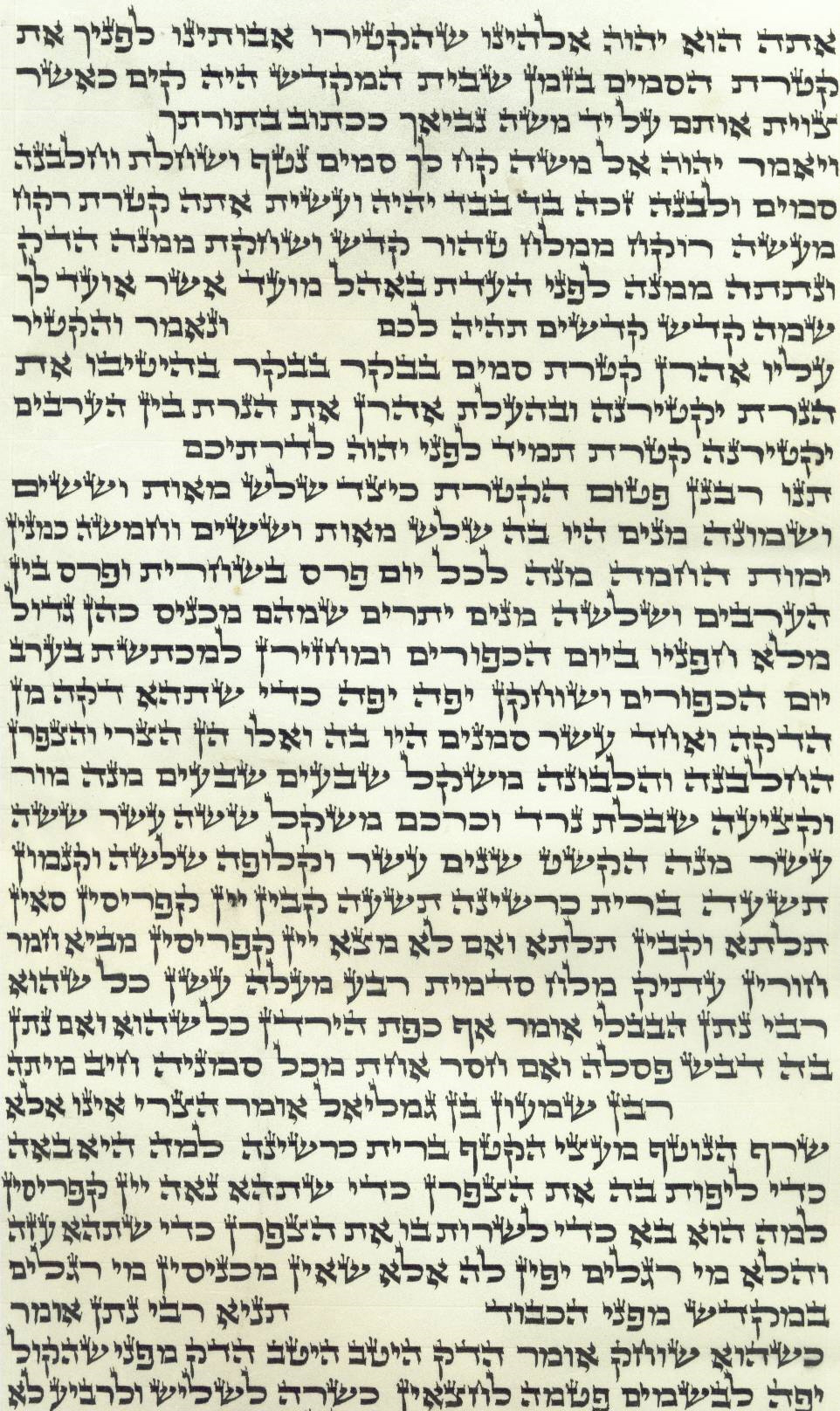
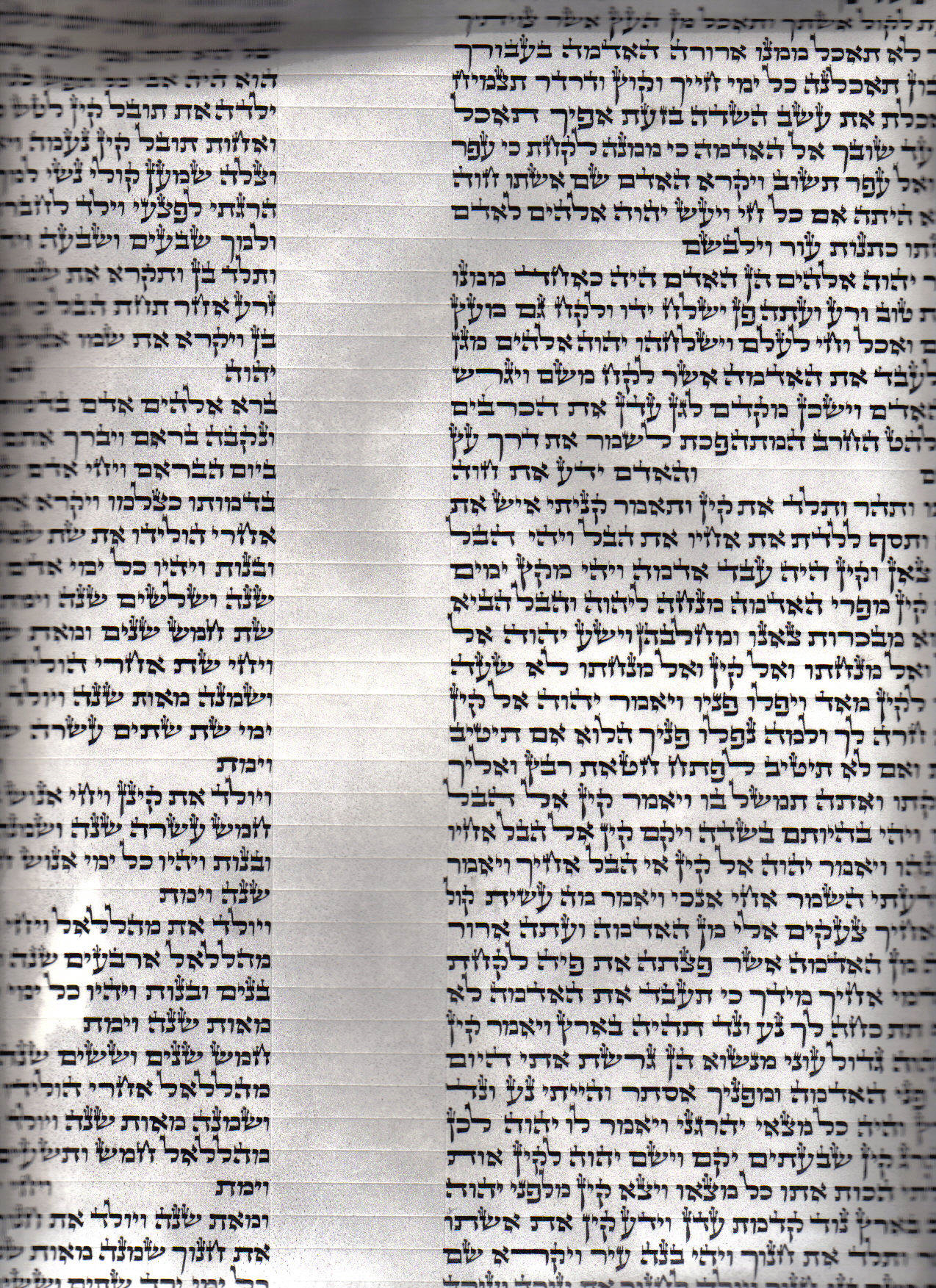
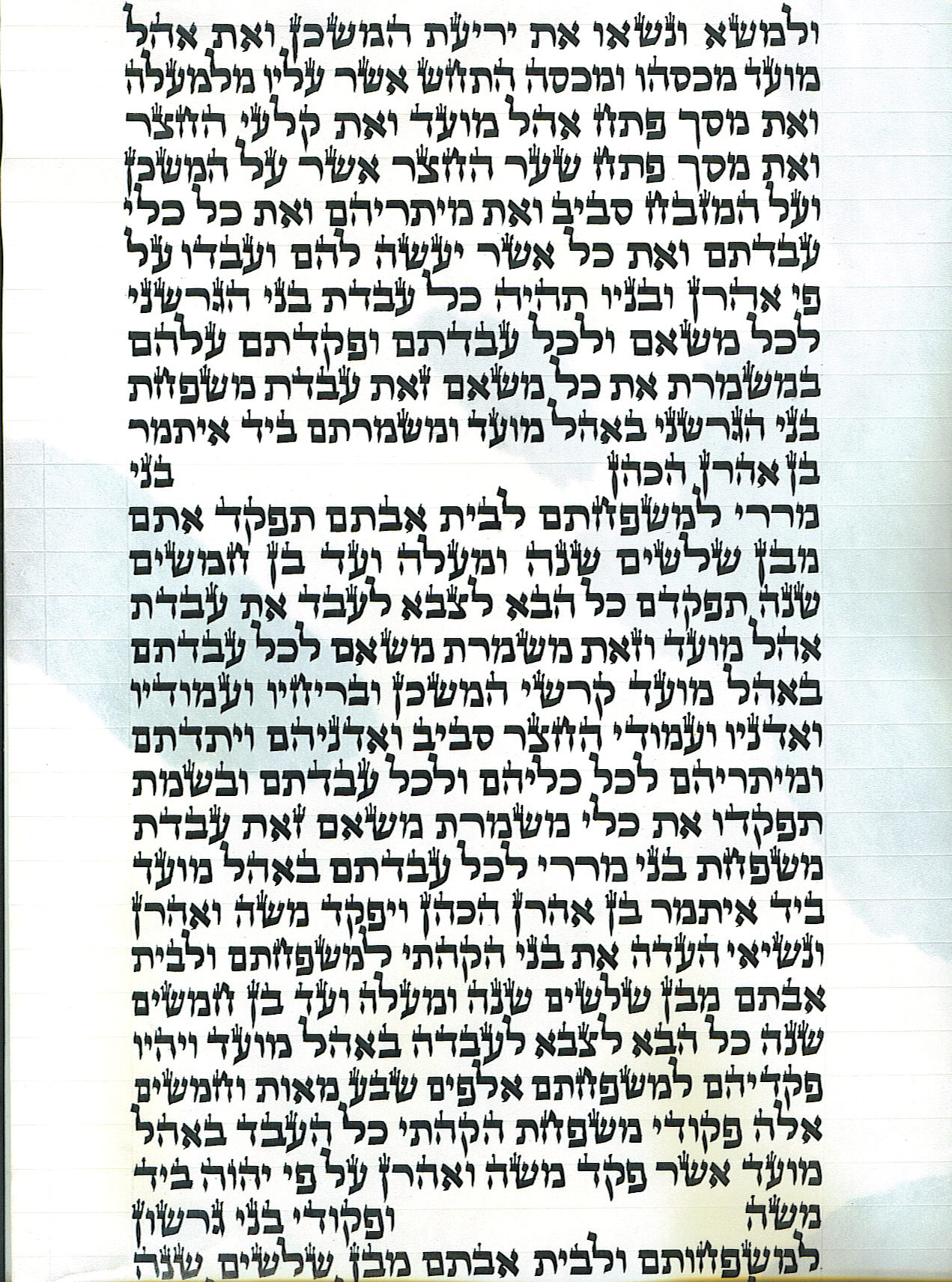
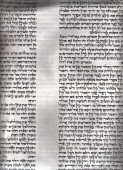
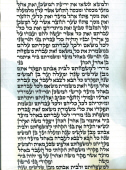
- There are three major styles of scripts: Ashkenazi Standard Beit Yosef, Ashkenazi ARI and Sefardi script.
| Beit Yosef |
ARI |
Sefardi |
(click photo for larger view) |
(click photo for larger view) |
(click photo for larger view) |
| 16th century author of the “Shulchan Aruch” or “Code of Jewish Law” - Rabbi Joseph Karo. For Torah writing, it refers to the style of writing codified by him. This is the standard style used by most Ashkenazi Jews. |
16th century Kabbalist - Rabbi Isaac Luria. For Torah writing, it refers to the style of writing instituted by him. This style is most commonly used by Chassidim and others who adhere to the Kabbalah. |
Literally means Spanish in Hebrew. For Torah writing, it refers to the style of writing used by Jews of Spanish and Middle Eastern descent. |
|